The methodology behind the standard

StreetMetrics measures out-of-home with a unified, real-world methodology built on real mobility data, physics-based viewsheds, and a continuous feedback loop that makes every campaign smarter than the last.

Why OOH numbers have always been hard to trust?

Most OOH impression counts are built from two fundamentally different datasets: static traffic averages for planning and mobile device data for measurement. When the campaign closes, the numbers don't match, not because something went wrong, but because they were never measuring the same thing to begin with.

This inconsistency is the single biggest barrier to OOH being treated like a data-driven channel. StreetMetrics was built to solve it.

One data source. The whole campaign lifecycle

Every StreetMetrics measurement starts with the same foundation: real device movement data, sourced from the same mobility signals across every phase of a campaign.

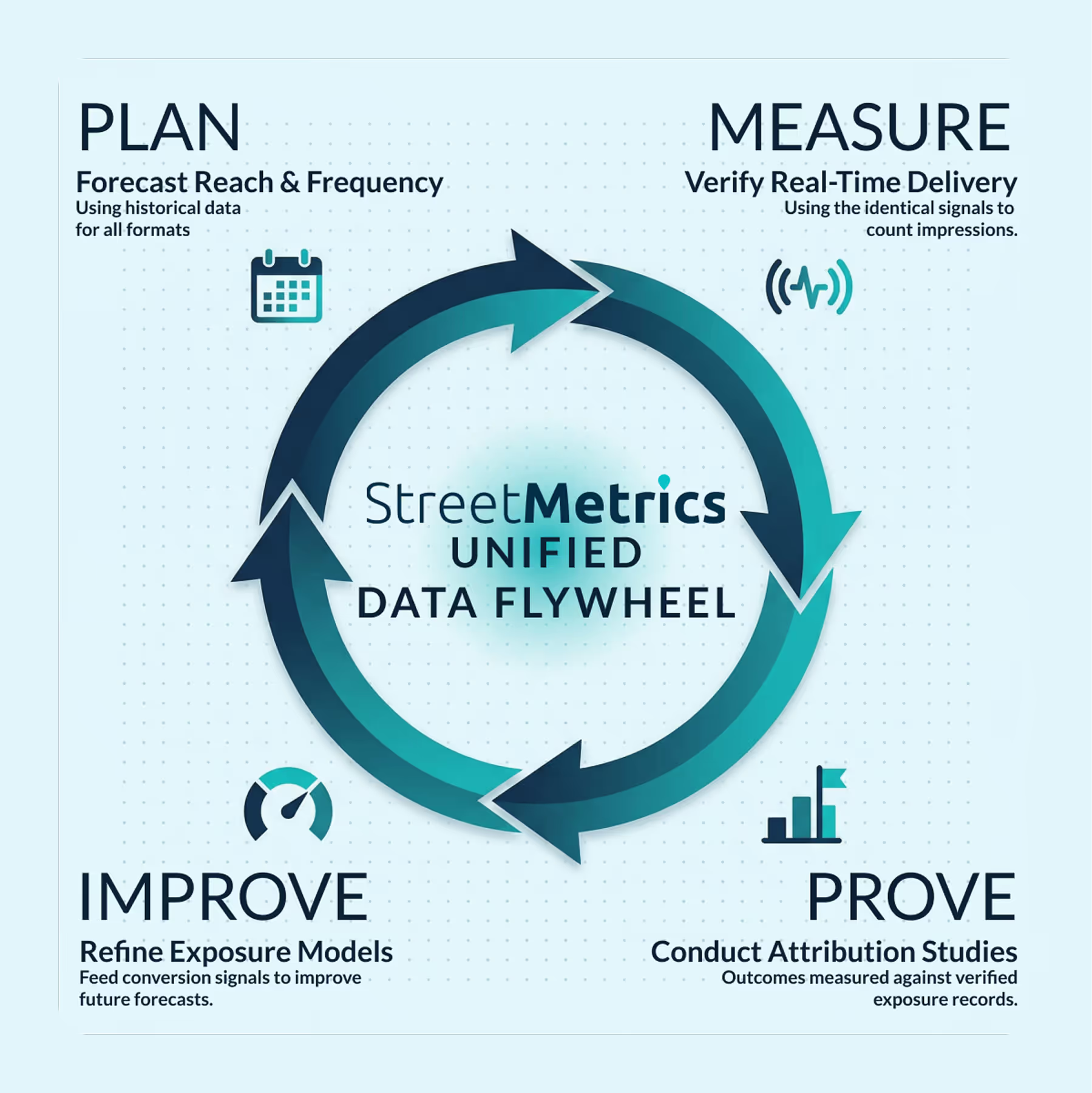
  • Plan When you plan in SmartSearch, you are using the same core methodology that powers your real-time measurement, leveraging historical mobility data for precise forecasting and the latest real-world mobility data for campaign proof of performance.
  • Measure The same source of mobility signals used in planning verifies delivery during the campaign, just with the latest data.
  • Prove Attribution studies are anchored to the same exposure backbone. Outcomes and conversions are measured against a verified record of who was in range of the ad.
  • Improve Conversion signals from attribution feed back into future exposure & planning models, improving forecasting accuracy over time.

This is what we call the Data Flywheel. Every campaign makes the next one more accurate.

We measure what people can actually see

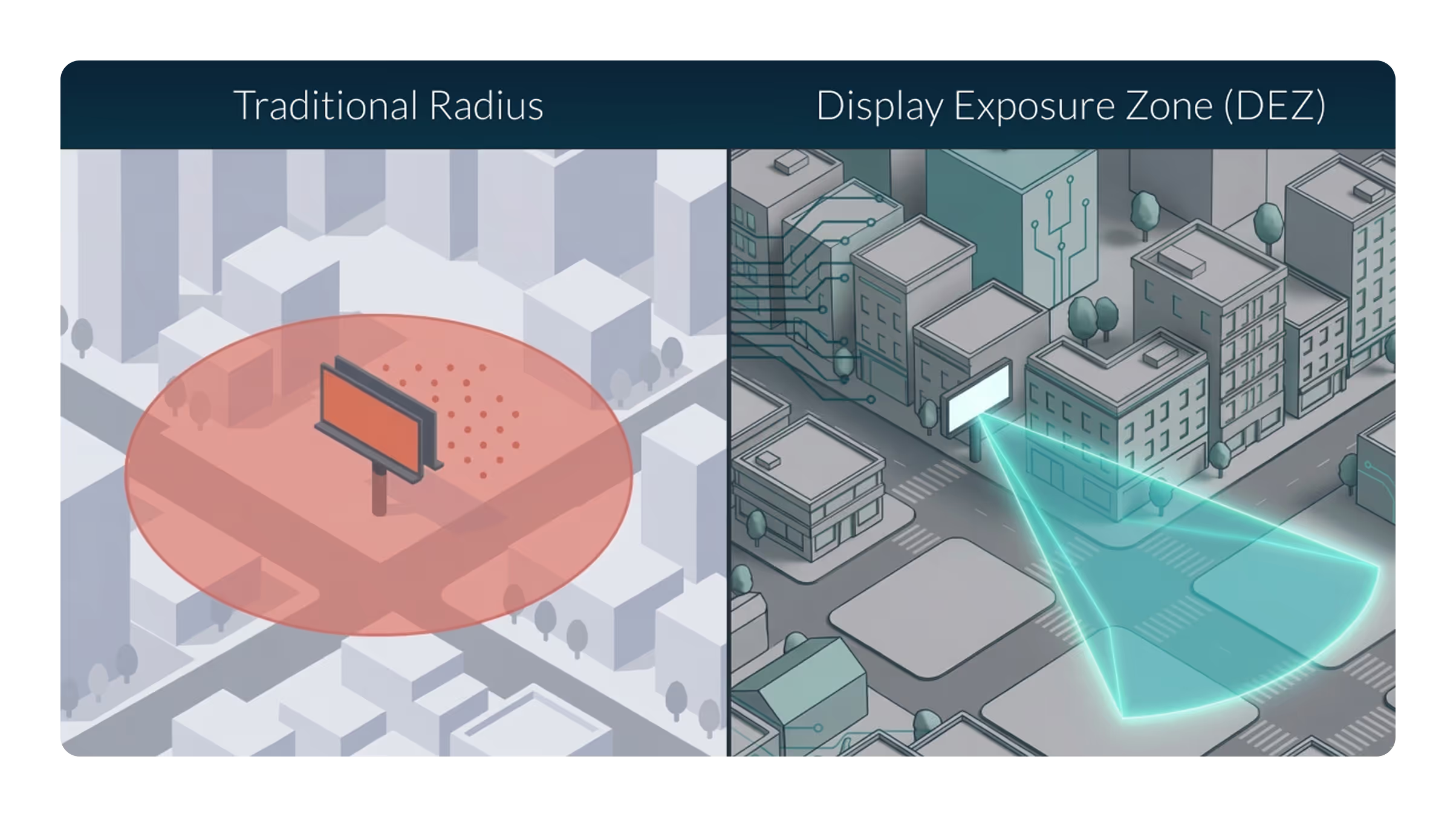
Most OOH audience segments are built from rough proximity, a radius around an ad location or census-level demographic overlays. That means the exposure data underlying those audiences counts people who couldn't see the ad and misses people who could.

StreetMetrics starts at the source. We generate a Display Exposure Zone (DEZ) for every piece of inventory, a physics-based polygon calculated from the unit's physical dimensions, height, azimuth (facing), and visual acuity thresholds. If a device wasn't in a position where a human eye could resolve the creative, it doesn't count.

For stationary inventory

The DEZ is a cone calculated from the unit's height, width, and azimuth, oriented toward the facing direction and bounded by the maximum distance at which the creative is visually resolvable.

For transit inventory

Moving assets use Dynamic Route Reconstruction. We follow the vehicle via GPS telemetry and GTFS-RT feeds, generating a continuous "moving viewshed" that follows the asset through space and time. A bus wrap's exposure zone changes every block, and we track all of it.

For digital inventory

Digital units require Ad Play Log verification, timestamped confirmation that the ad was actually displayed on the screen before any impression is counted. We do not assume a device in a digital unit's zone was exposed to your ad if the ad wasn't running.

Data that reflects when your campaign actually ran

StreetMetrics delivers campaign metrics on an 8-day delay with daily refresh, not month-end summaries, not static post-campaign PDFs. You see delivery data as it happens, with hour-of-day granularity across markets and formats.

This means discrepancies are visible during a flight, not after it. Billing reconciliation happens against current data. And clients don't wait until the campaign ends to see whether it delivered.

  • Daily-refreshed impression delivery
  • Hour-of-day granularity
  • Route coverage verification by date
  • Consistent methodology across operators and markets

Demographic reporting on the same backbone as impressions

StreetMetrics demographic data isn't a separate dataset added after the fact. 150+ audience segments (125 behavioral plus standard demographic cuts), powered by Accretive, are applied at the device level using the same mobility signals that produce impression counts. That means your demographic reporting is methodologically consistent with your impression reporting.

You're not reconciling two different numbers. You're reading two dimensions of the same data.

Built for a privacy-first future

StreetMetrics processes all device data using hashed, privacy-compliant identifiers. We do not store or transmit personally identifiable information. Our Diffusion Layer, a statistical signal-smoothing architecture, enables the system to maintain accurate exposure counts even as individual device resolution decreases due to privacy regulation changes.

Measurement integrity doesn't depend on any single data provider or identifier regime.

We publish our methods. Read them

StreetMetrics makes our methodology available to clients, agency partners, auditors, and industry bodies. We show our work, including our assumptions, our validation processes, and our current-state vs. future-state roadmap.

Integrity in the numbers. We publish clear methods, own our assumptions, and let the data lead.
StreetMetrics Brand Values